Pressure washing and soft washing get used interchangeably in casual conversation, but they're fundamentally different processes with fundamentally different applications. Using the wrong one can cost you a roof. Using the right one saves you thousands.
Every week, we get calls from homeowners who've either had something ruined by the wrong method, or who are nervous about booking because they don't know which they need. So let's clear it up once and for all.
What pressure washing actually is
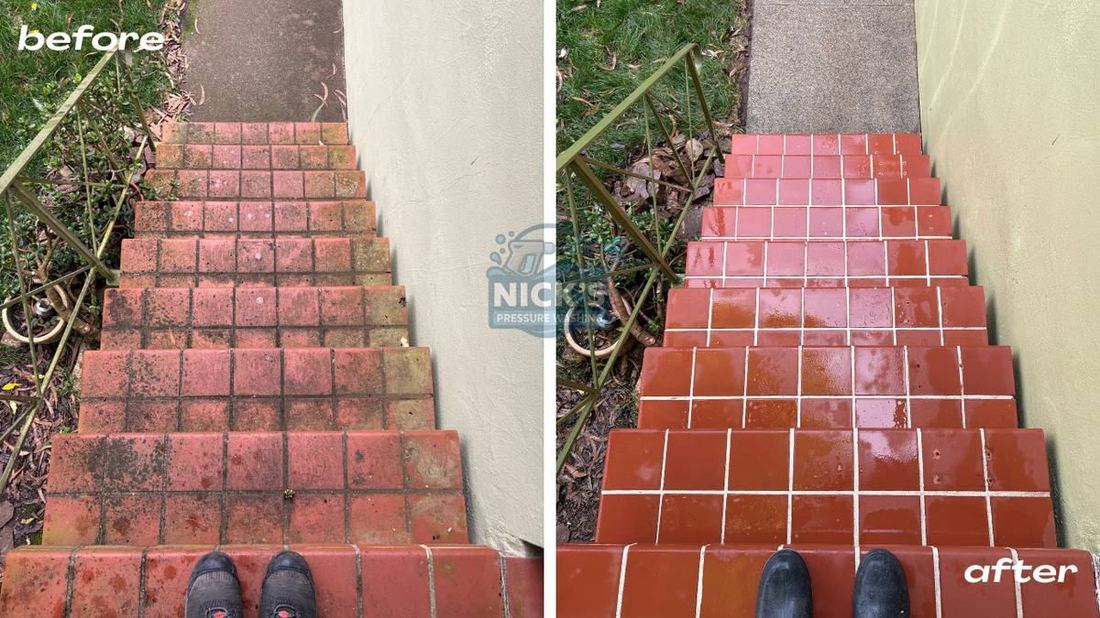
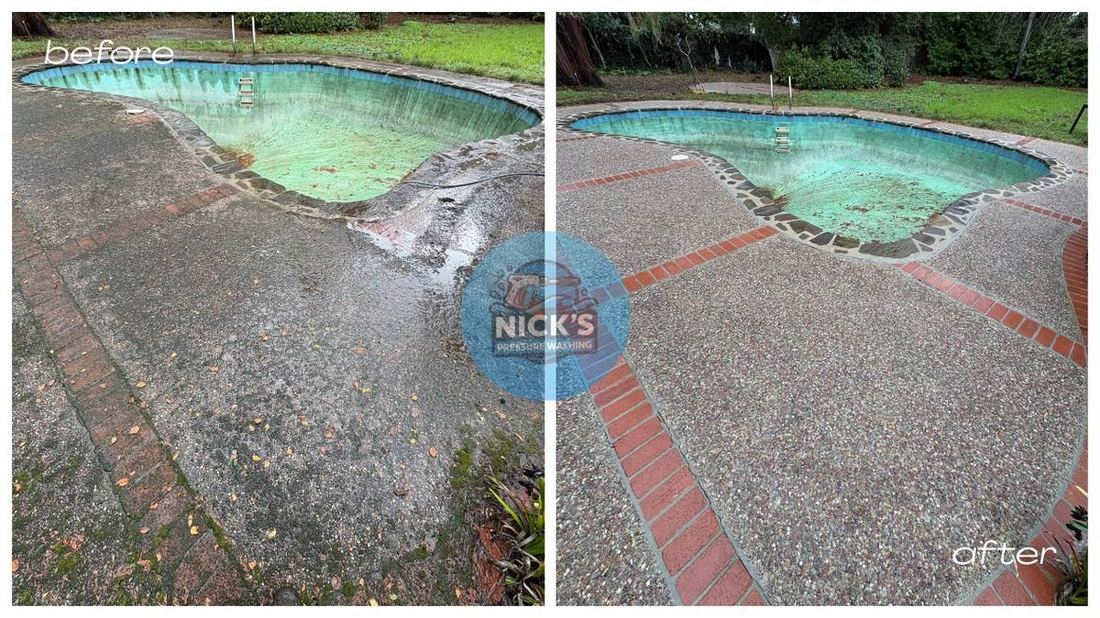
Pressure washing uses high-velocity water — typically between 2,500 and 4,000 PSI for professional work — to physically blast contaminants off a surface. The water itself does most of the work; detergents are secondary.
Pressure washing is the right choice for:
- Concrete driveways and walkways
- Brick, pavers, and exposed aggregate
- Stone patios and pool decks
- Heavy equipment and industrial surfaces
- Commercial sidewalks and parking areas
These surfaces can take the mechanical force. In fact, they often need it — organic stains, oil, tire marks, and deep-set grime can't be dissolved away. They need to be physically dislodged.
What soft washing actually is
Soft washing is the opposite approach. Low pressure — usually under 500 PSI, roughly the force of a garden hose — combined with specialized biodegradable detergents that kill contaminants at the root.
Soft washing is the right choice for:
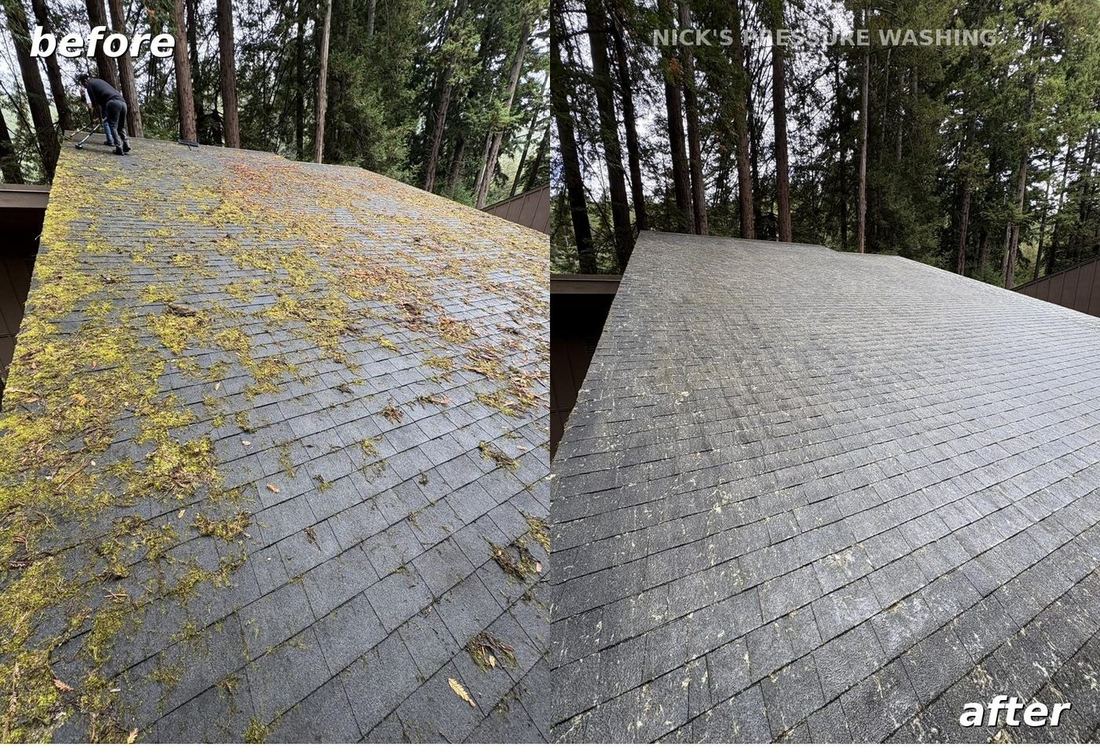
- Roofs (asphalt shingle, tile, metal, slate)
- Siding (wood, stucco, vinyl, fiber cement)
- Screens, awnings, and fabric surfaces
- Windows and painted surfaces
- Anything with moss, mildew, or algae growing in the material rather than on it
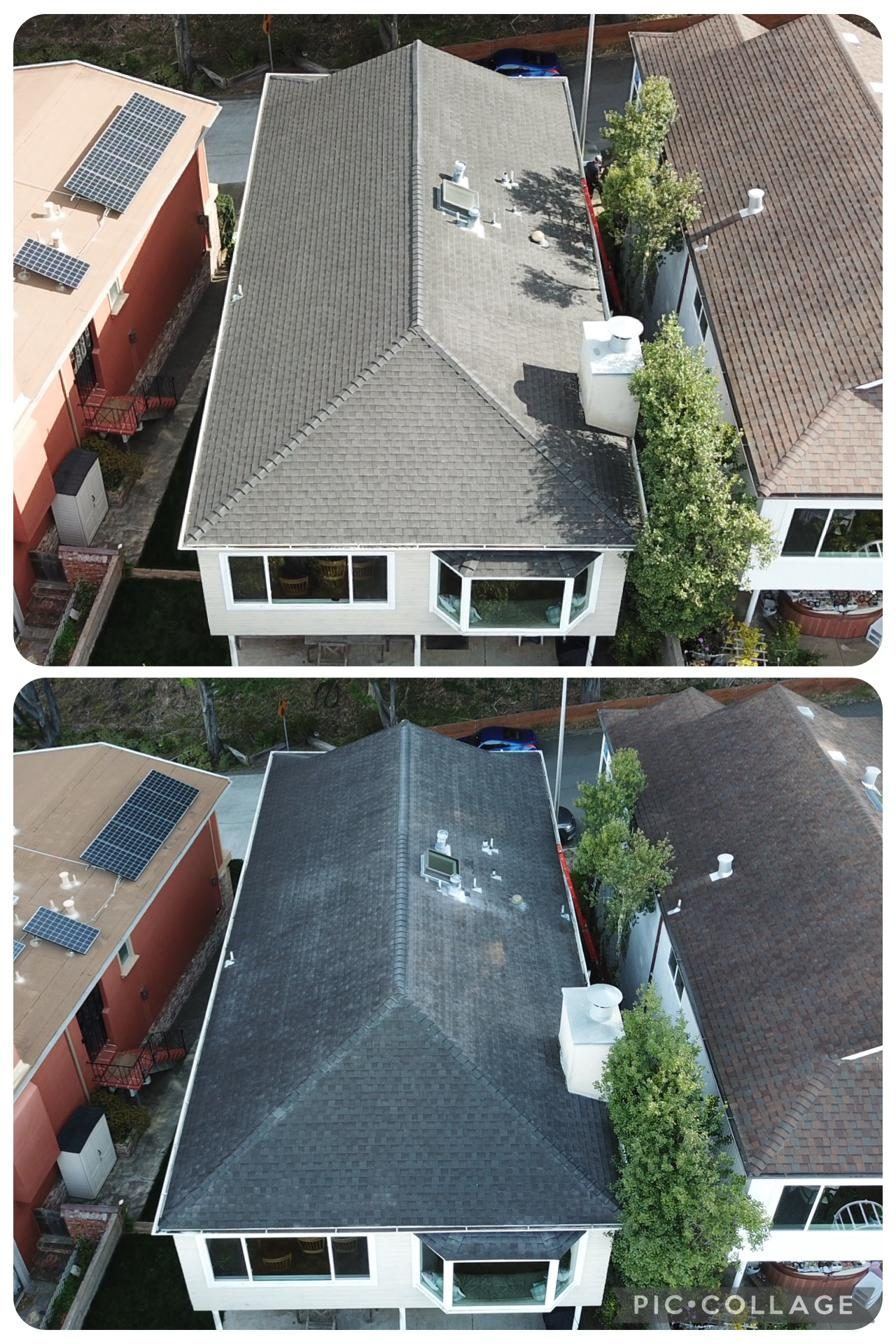
Pressure removes what's sitting on a surface. Soft wash kills what's living in it. That's the entire difference.

What happens when contractors use the wrong method
Here's where the real cost shows up. When a pressure washer gets pointed at something that needs a soft wash, the damage is usually irreversible and always expensive.
Blown asphalt shingle granules
Asphalt shingles are coated in a layer of protective mineral granules. Direct pressure washing strips these off by the handful. Once they're gone, UV starts breaking down the underlying asphalt — your roof's warranty is typically voided, and the lifespan gets cut in half.
Water intrusion into siding
Professional pressure washers can drive water through siding seams, around window frames, and behind stucco — where it sits and rots the framing. This is particularly common with aggressive pressure on vinyl and fiber cement.
Stripped paint and oxidation
Painted siding, trim, and fences can have their topcoat literally peeled by high-pressure water. What was a minor algae problem becomes a full repaint.
Mortar erosion on brick
Older brick buildings can have their mortar joints eroded by aggressive pressure, leading to water infiltration and expensive repointing work.
Why soft washing actually lasts longer
Here's the part that surprises most homeowners: a proper soft wash lasts 4–6 times longer than pressure washing the same surface. Why? Because it kills the living organisms causing the stain.
Algae, mildew, moss, and lichen are biological colonies. Pressure washing knocks the visible portion off, but the roots remain in the substrate and regrow within months. Soft washing uses targeted biocides that kill the entire colony — root and all. The surface stays clean for years, not months.
Most Peninsula homes need both
For the typical Burlingame, Hillsborough, or San Mateo property, the right package is a combination approach:
- Driveway, walkways, patio, pool deck: Pressure wash
- Roof, siding, fences, anywhere delicate: Soft wash
- Brick walls, decorative stone, exposed aggregate: Usually a lower-pressure wash with appropriate pre-treatment
Any contractor who only offers one method is a contractor who's going to use it on everything — even the surfaces that shouldn't get it. That's the real risk.
What to ask before you hire
- "Will you be soft washing my roof, or pressure washing it?" (Only answer: soft wash.)
- "What detergents do you use for siding?" (Should be biodegradable, low-pressure applied.)
- "What PSI will you use on my driveway?" (2,500–3,500 is typical for residential concrete.)
- "Are you licensed and insured?" (Always. Get proof.)
The right contractor will have an immediate, specific answer to each of these. The wrong one will dodge the question.