Gas station pressure washing that keeps the pumps open.
Oil-stained fueling pads, canopies, dispensers and store fronts cleaned with hot water, overnight, one island at a time. Your station stays open and looks cared for by morning.
Get a gas station quote
Thanks — we got it.
Your request is on its way to Nick. We'll be in touch within 24 hours.
Call or text (628) 219-3491
Clean concrete and a bright canopy are what drivers judge a station by from the street.


Photos above are stock images shown for illustration (Unsplash: Urvish Oza, waidshots, engin akyurt). Our own commercial work is below.
See our real before & afters →Drivers pick the station that looks clean.
A driver decides where to stop in a couple of seconds, from the street. Black, oil-soaked concrete around the pumps, a grey canopy and a sticky trash area say the restrooms and the store are probably no better. A clean forecourt says the opposite, and it brings people inside, where the margin is.
Fueling pads take more abuse than any other concrete: dripped fuel and motor oil, tire marks, spilled drinks, gum and whatever leaks out of the trash cans. Rain doesn’t wash it off. It turns it into a slick film, and that’s a slip-and-fall risk next to moving cars.
Brand inspections and mystery-shop scores look at exactly these things: pad condition, canopy, dispensers, curbs and bollards, trash enclosures. Regular gas station pressure washing is how independent and branded stations keep those scores up without tying up their own staff.
The whole forecourt, not just the pads.
Fueling pads and drive lanes. Hot water, a commercial degreaser and a rotary surface cleaner lift oil, fuel residue and tire marks evenly, without the zebra stripes a bare wand leaves.
Canopy, fascia and columns. Diesel soot, cobwebs, bird droppings and green algae washed off at low pressure so paint, lighting and signage aren’t damaged.
Dispensers, bollards and curbs. Pump faces, card readers and hoses are cleaned by hand or at low pressure. Bollards, island curbs and painted lines are brought back to their color.
Store front, sidewalk and windows. Gum, drink spills and entry-mat grime removed, glass cleaned, so the walk from the pump to the door is clean too.
Trash enclosures, dumpster pads and air/vacuum islands. The spots that smell first in summer. Degreased and rinsed.
Overnight, one island at a time, water kept out of the storm drain.
We schedule for your slowest hours, usually overnight. One island is coned off and cleaned while the others keep pumping, then we move on. Nothing is closed for longer than it takes to wash and rinse it.
Wash water does not go down the storm drain. In San Mateo County and San Francisco, only rain is allowed in storm drains, and water from fueling areas carries oil and fuel. Before we start we locate the drains on your lot and plan how the water is contained and where it goes, following the county’s rules for mobile cleaners. Loose debris and absorbent are picked up dry first, so less ends up in the water to begin with.
We stay clear of emergency shut-offs, tank fill covers and vapor recovery equipment, and keep high pressure away from electronics. If you have brand or landlord requirements for vendors, send them with your quote request.
Four services.
Obsessively executed.
The same visit can cover the rest of the property: building walls, the roof and gutters over the store, and the parking area.
Roof Cleaning & Moss Removal
Moss, algae, lichen and the black streaks on shingle, tile and cedar roofs — removed at the root with low-pressure soft washing. Never a pressure washer on a roof.
- Moss, algae & black streak removal
- Tile, shingle, cedar & slate
- Insurance roof notices
House Washing
Exterior house washing for stucco, wood, Hardie and painted siding. Green algae, black mildew and roofline grime gone — the result of a power wash without the damage.
- Stucco & siding cleaning
- Mildew, algae & cobweb removal
- Add exterior windows
Driveway & Patio Pressure Washing
Hot-water pressure washing that lifts oil, algae, moss and years of grime from concrete, brick, pavers, exposed aggregate and stone — without stripping the surface.
- Driveways & walkways
- Patios, decks & pool decks
- Brick & paver restoration
Gutter Cleaning
Gutters cleared by hand, every downspout flushed until it runs clear, and a look at the hardware for sagging, pulled spikes or separated seams. Book before the rains.
- Full debris removal
- Clogged downspouts cleared
- Damage inspection report
Before. After.
Real jobs: entries, parking areas and oil-stained concrete cleaned after hours.
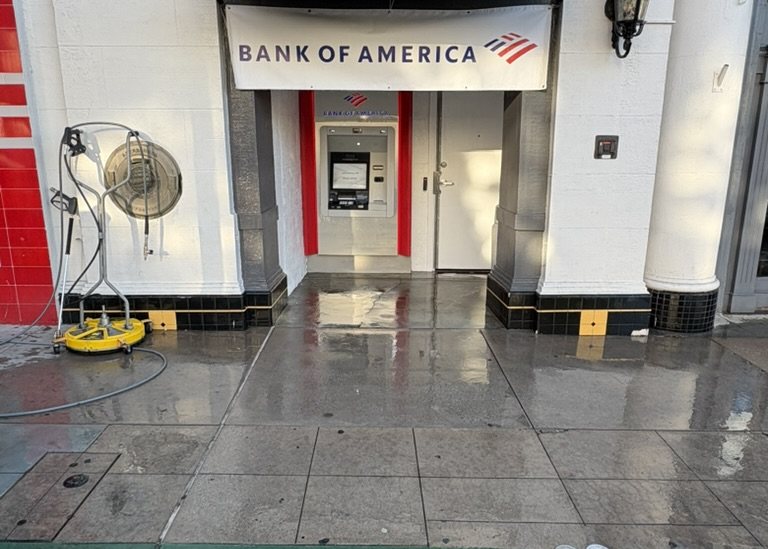
Bank ATM entry & sidewalk — surface cleaned
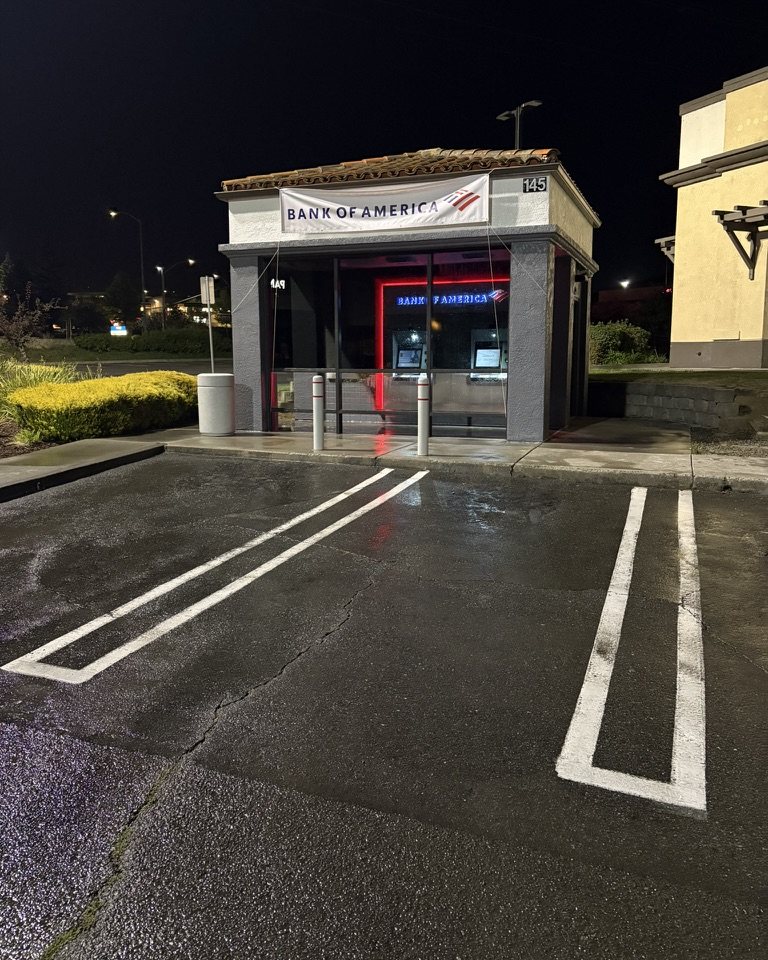
Drive-up kiosk & parking area — done after dark
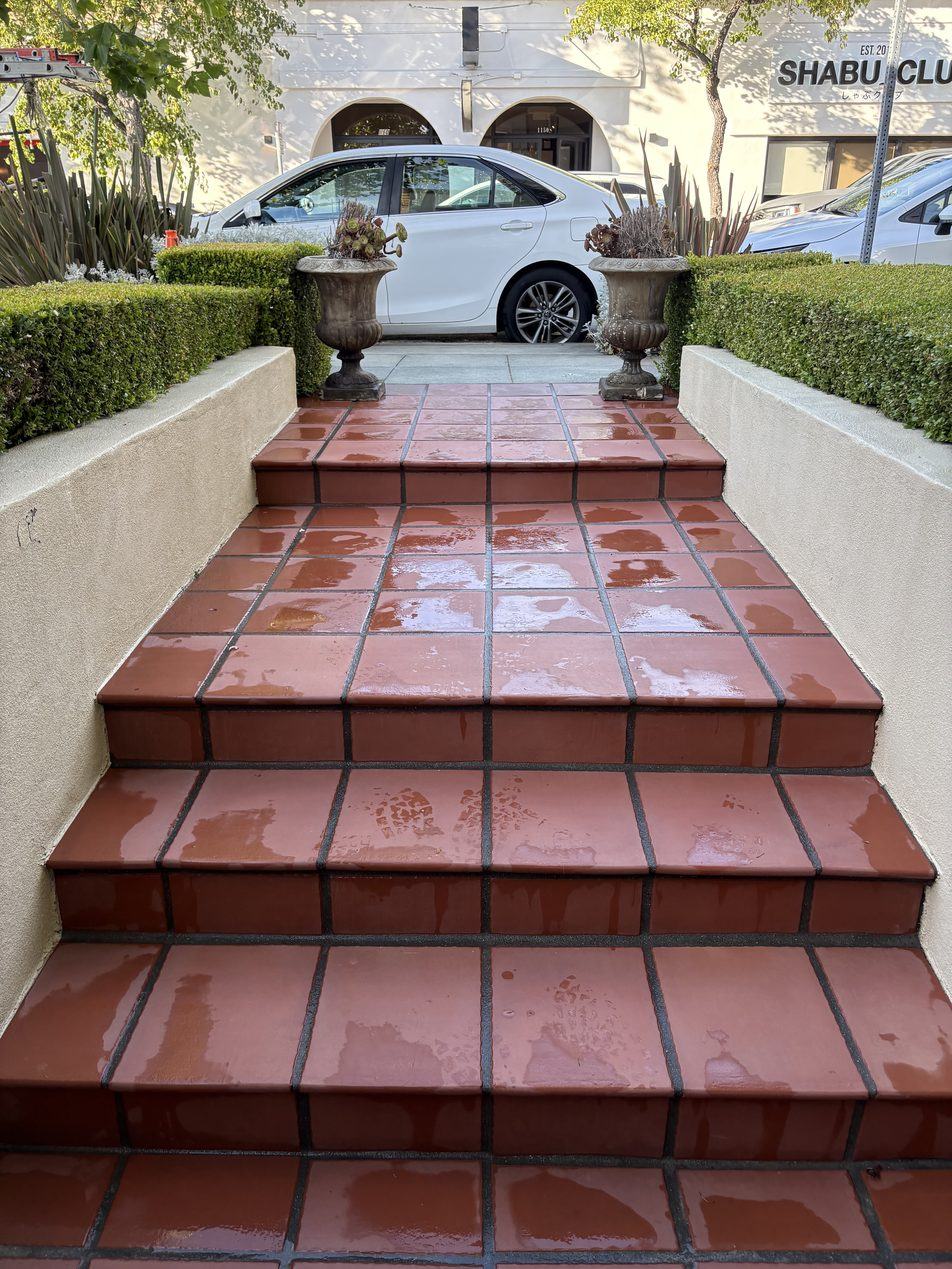
Store entry steps — after cleaning
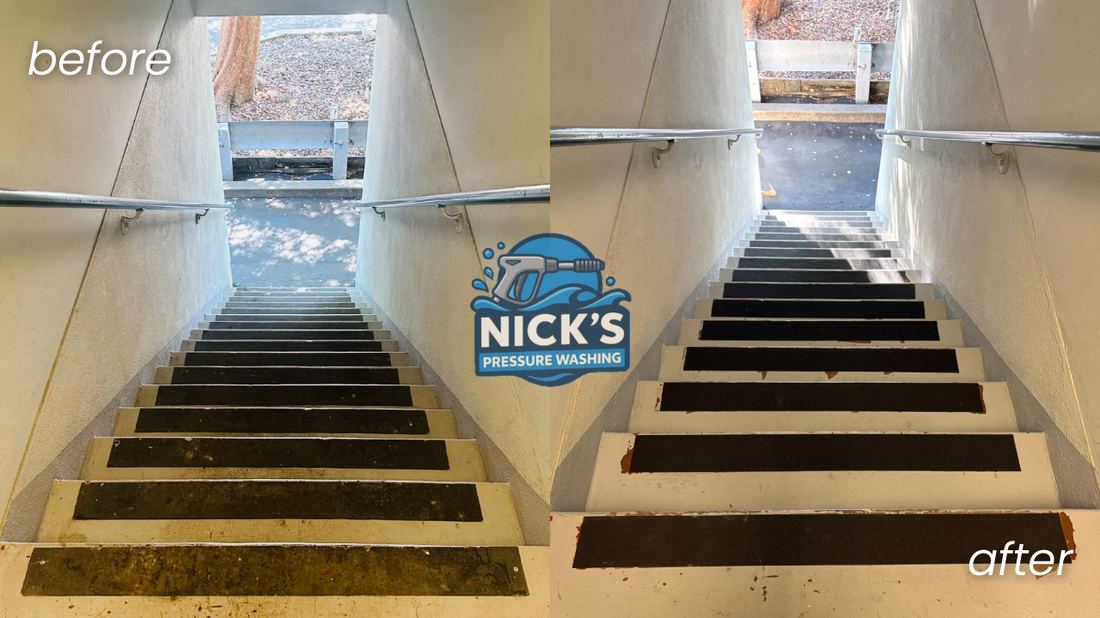
Stained concrete — years of grime lifted
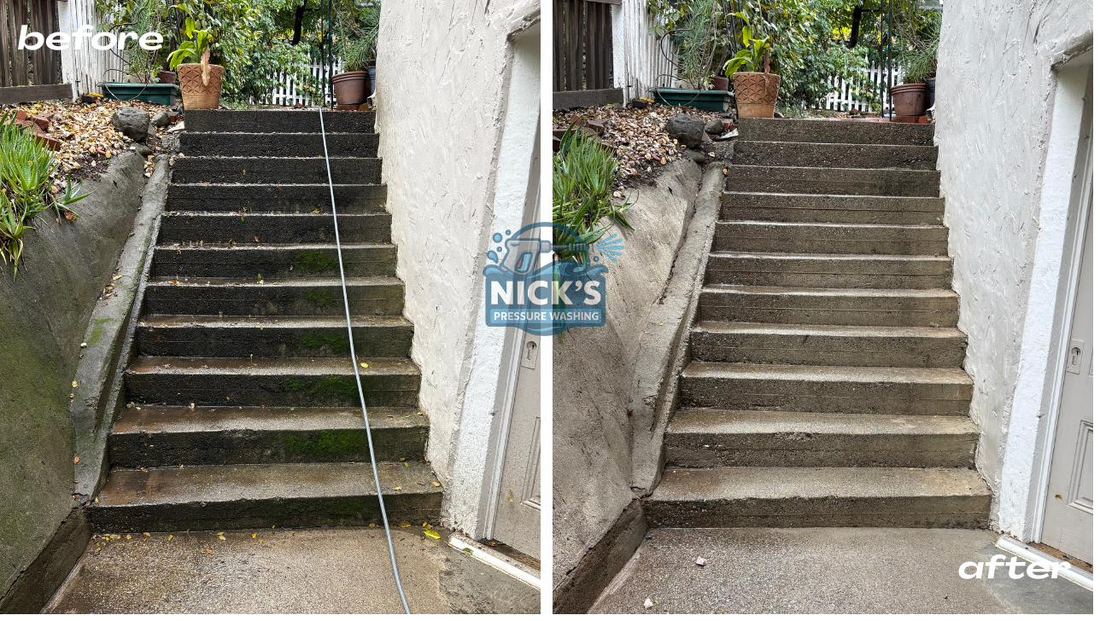
Concrete — before and after
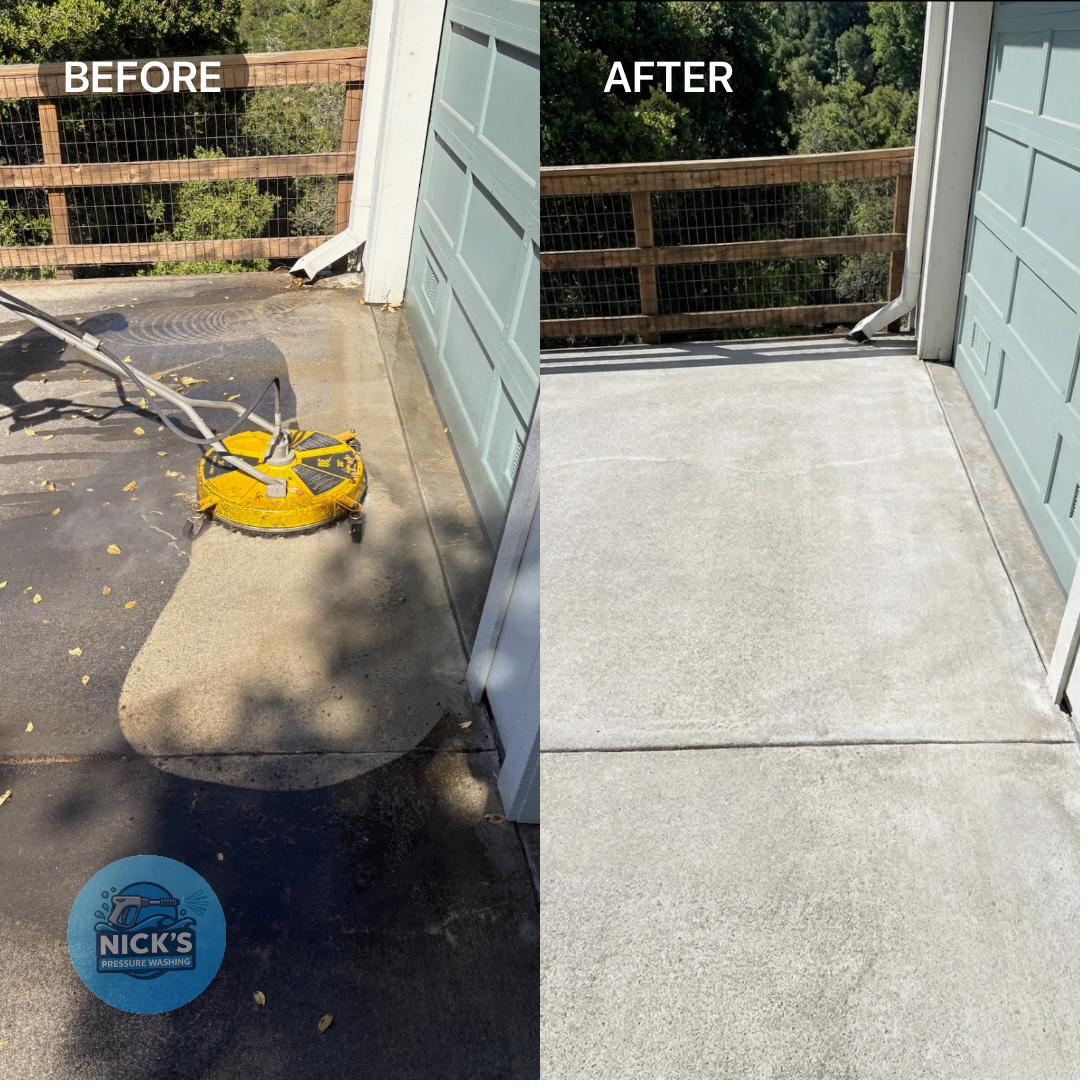
Oil and tire marks — surface cleaned
A simple, respectful process.
Simple for owners and district managers: one quote, a set night, and photos when it’s done.
Send the station address
Call, text or use the form. Tell us how many pumps and what’s bothering you most. We reply within 24 hours.
Site check & quote
We look at the pads, canopy and drains, then send a per-visit price for a one-time clean and for a recurring schedule.
Overnight clean
One island at a time, coned off, with the rest of the station open. Hot water, degreaser and a surface cleaner.
Photos & schedule
You get before-and-after photos the next morning, and the next visit goes on the calendar if you want one.
Gas station cleaning across San Mateo County and San Francisco.
What station owners actually ask.
How much does gas station pressure washing cost?
It’s quoted per visit, based on the number of fueling positions, the square footage of concrete, how heavy the oil staining is, and whether the canopy, dispensers and store front are included. Send the address or a few photos and we’ll quote within 24 hours. Recurring schedules cost less per visit than a one-time restoration clean.
How often should a gas station be pressure washed?
Most stations do the fueling pads monthly or quarterly, depending on traffic, and the canopy, dispensers and store front once or twice a year. A busy station on El Camino needs more than a quiet neighborhood one. We’ll recommend a schedule after the first clean, once we see how fast the pads darken.
Will the oil stains come out completely?
Fresh drips and tire marks usually come out. Old oil that has soaked into the concrete for years lightens a lot with hot water and degreaser, but a shadow can remain. We’ll tell you what to expect on site before we start, and regular cleaning keeps new stains from setting.
Do you have to close the station?
No. We work overnight or in the slowest hours and clean one island at a time, coned off, so the other pumps stay open. Each island is back in service as soon as it’s rinsed.
Where does the wash water go?
Not into the storm drain. In San Mateo County and San Francisco, only rain is allowed in storm drains, and wash water from fueling areas carries oil and fuel residue. Before we start we find the storm drains on your lot and plan how the water is contained and where it goes, in line with the county’s rules for mobile cleaners.
Is it safe to pressure wash around fuel dispensers?
Yes, done correctly. We keep high pressure off dispenser faces, card readers, screens and hoses, clean those by hand or at low pressure, and stay clear of emergency shut-offs and tank fill covers.
Do you clean the canopy and the convenience store front too?
Yes. Canopy fascia and underside, columns, dispensers, bollards and curbs, the store front and sidewalk, windows, trash enclosures and the dumpster pad can all go on the same visit. See our commercial pressure washing page for the rest.
Are you licensed and insured?
Yes. Nick’s Pressure Washing is licensed and insured. Ask and we’ll send a certificate of insurance for your files or your brand’s vendor requirements.
Let’s put your station on a schedule.
Free estimate within 24 hours. No pressure, no upsell, just a straight answer on what it'll cost and when we can start.
Questions? Email us anytime: pressurewashbynick@gmail.com