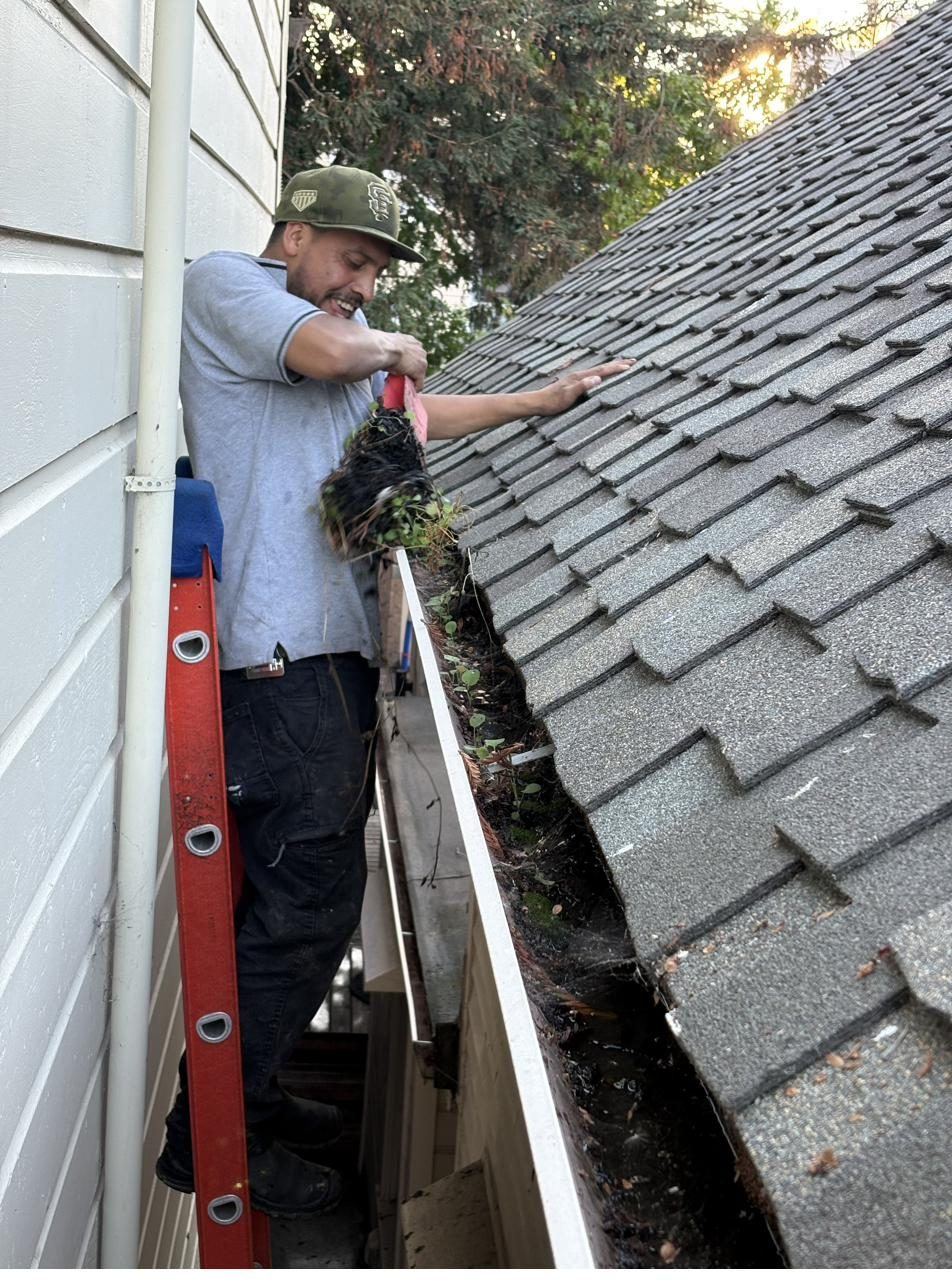
Every October we get the same call. Someone in Burlingame Park or the Millbrae hills watched the first real storm come through, saw water pouring over the edge of the gutter in one spot, and wants to know how fast we can come. The honest answer is that the best time to book was September, and the second-best time is right now.
This is the short version of what we tell them, written down so you can plan ahead instead of calling in the rain.
Why Peninsula gutters fill faster
Three things make this stretch of the Peninsula unusually hard on gutters. The first is tree canopy. Burlingame calls itself the City of Trees for a reason, Hillsborough is oak and redwood from Skyline to El Camino, and Millbrae’s hillside streets are lined with eucalyptus and pine. Those trees drop year-round, not just in fall: redwood litter, oak catkins, eucalyptus bark, pine needles. A gutter under a redwood can fill in a single season.
The second is fog. The marine layer that comes over the ridge into Millbrae, the Hillsborough hills and western San Mateo keeps everything damp. Damp debris packs down instead of blowing out, and it grows moss. By September a gutter that hasn’t been touched since spring is often a solid mat of compost with plants in it.
The third is the rain pattern itself. We get almost nothing from May to October, then the first storms arrive hard. There is no gentle shoulder season that flushes gutters gradually. Whatever is in there when the first inch of rain falls is what your roof drains through.
What one clogged downspout actually does
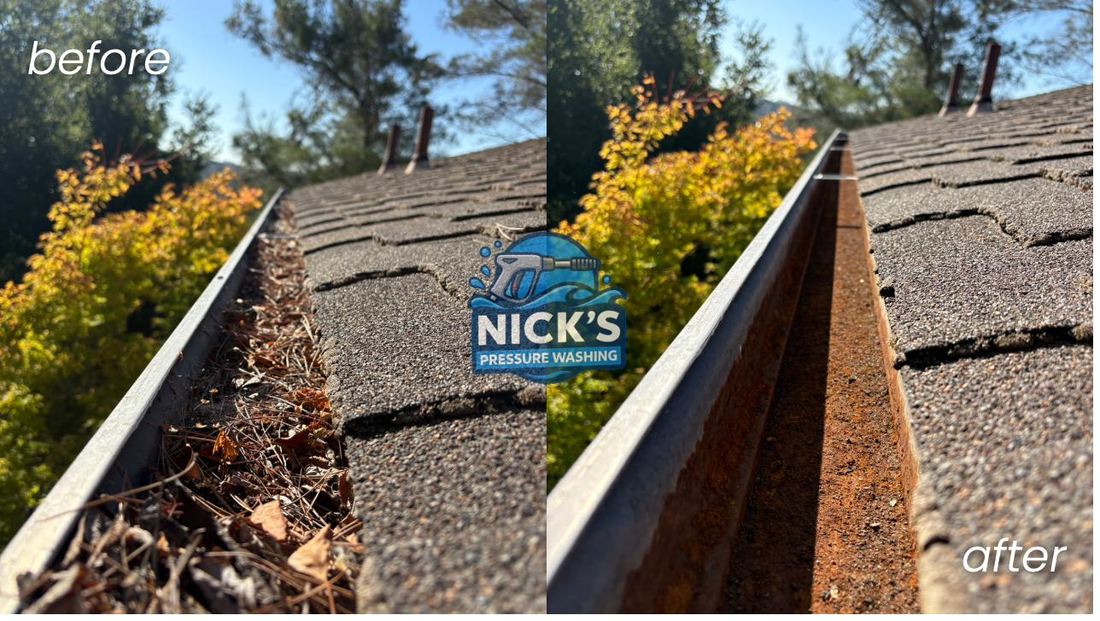
People picture a clogged gutter as an annoyance: water splashing off the edge, a puddle by the front step. What it really is, over a rainy season, is a slow-motion plumbing failure aimed at the parts of your house that cost the most to fix.
- Fascia and soffit rot. Water sheeting over the gutter edge runs back along the underside of the gutter and soaks the fascia board it’s attached to. Painted wood fascia on a 1950s Millbrae ranch or a Burlingame Craftsman will rot in two or three wet winters. Replacing it means pulling the gutter, too.
- Foundation and crawlspace water. A downspout is supposed to move roof water several feet from the house. A clogged one dumps that water right at the foundation. On the Peninsula’s clay soils that means standing water in the crawlspace, and in the hills it means it finds its way into the garage or a lower level.
- Ice-free, but not damage-free. We don’t get ice dams here, but a gutter full of wet debris is heavy. Hangers pull, seams separate, and the gutter starts to sag away from the roof edge. Once it sags, it holds water permanently and rusts from the inside.
- The roof itself. Debris packed in the gutter backs water up under the first course of shingles. Over time that lifts the shingle edge and lets water behind it. If your insurance company is already looking at aerial photos of your roof, a gutter line full of moss and debris is exactly what they flag. (More on that in our insurance article.)
When to clean gutters on the Peninsula
Twice a year for most homes. The one that matters is late September through early November: after most of the leaf drop, before the first real storm. If you only book one cleaning a year, book that one.
The second is spring, after the rains, when winter debris has dried into a mat and the downspouts are packed. Spring is also when we can see hardware problems clearly, since everything is dry.
Homes under redwoods, big oaks or eucalyptus in Hillsborough, Woodside, Millbrae and parts of Burlingame often need a third visit mid-winter. A clogged downspout after the first storms is the usual sign.
What a proper gutter cleaning includes
The difference between a gutter cleaning that works and one that doesn’t is mostly the downspouts. Blowing debris out of the open channel with a leaf blower looks productive and does nothing for the part of the system that actually clogs. Here is what we do on every job, and what you should expect from anyone you hire:
- Cleared by hand. Debris comes out in buckets, not onto your patio and plants.
- Every downspout flushed. From the top with a hose until it runs clear at the bottom. If it doesn’t clear, we work it until it does, and if the blockage is underground in a drain line, we tell you.
- Hardware check. Sagging sections, pulled hangers, separated seams, rust. You get told what we found, not just an invoice.
- Gutter faces. Optional, but the black streaks down the outside of your gutters come off with the same low-pressure wash we use on siding, and it makes the house look finished.
About gutter guards
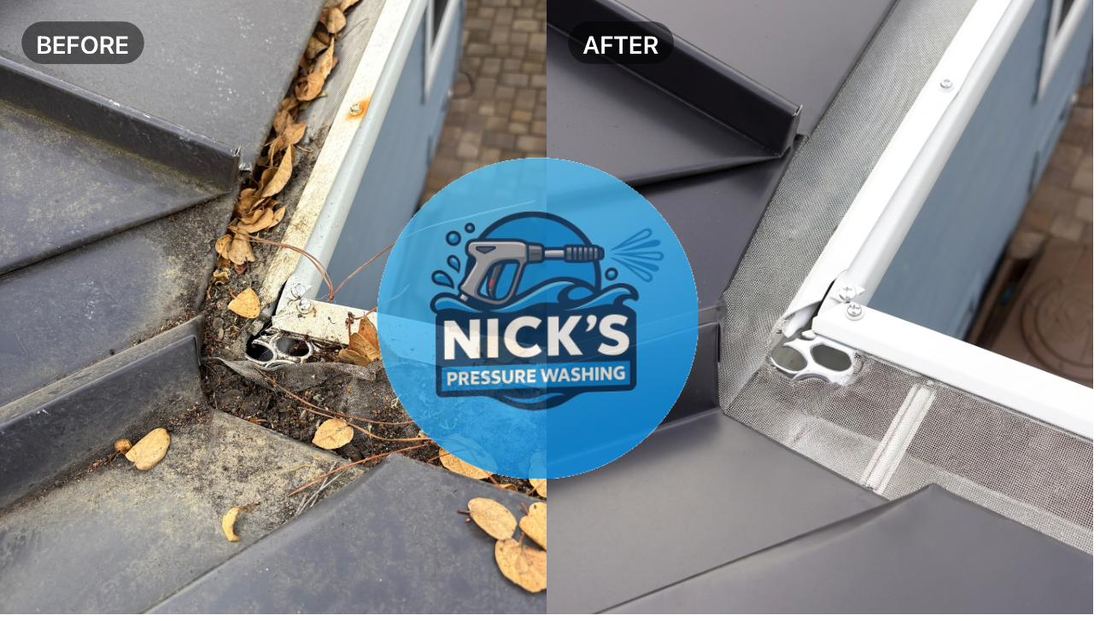
We get asked constantly. The short answer: good guards reduce cleaning frequency under deciduous trees and do very little under redwoods and pines, whose fine litter goes straight through or mats on top. They also make a proper downspout flush harder. If you have a big-leaf tree over the house, guards can be worth it. Under a redwood, save the money and book two cleanings a year.
What it costs
Most single-story Peninsula homes are a couple hundred dollars; two-story homes and properties with heavy tree cover run more. Steep roofs and long runs are quoted on site. Every estimate is free and back within 24 hours, and gutter cleaning is usually scheduled within a few days.
If you’re in Burlingame, Millbrae, Hillsborough, San Mateo or anywhere on the Peninsula and haven’t had the gutters looked at since spring, this is the week. Gutter cleaning details are here, or just call or text and we’ll get you on the calendar before the first storm.